
Ever wake up feeling like your jaw took a beating while you were sound asleep? Or, maybe you have a raging morning headache for no reason. Perhaps your partner tells you that you sounded like a coffee grinder at 3:00 AM. Dr. Johnson has heard stories like these from many patients. They often wonder if stress is the cause. They sit in the chair, massage their sore temples, and swear, “But, I don’t even feel that stressed!”
When it comes to night-time tooth grinding, stress gets a lot of the blame, but teeth grinding and anxiety aren’t necessarily connected the way people think. Stress is usually not the whole story.
What Is Teeth Grinding?
In clinical terms, teeth grinding is called bruxism. Many people don’t even know they grind their teeth until a partner points it out or a dentist mentions the wear on their teeth. It’s more common than people realize. One analysis found that about 1 in 4 people experience some form of it.
It happens when your jaw muscles repeatedly activate, causing you to clench or grind your teeth. This can put real force on your jaw, especially if you do it while you sleep.
There are actually two main types:
1. Sleep Bruxism
Teeth grinding at night is called sleep bruxism. It involves repetitive jaw-muscle activity during sleep. It’s linked to sleep arousal patterns. Signs that you might grind at night include:
- Morning jaw stiffness: Waking up with a stiff or achy jaw.
- Worn-down tooth edges: Teeth appear flat or short.
- Clicking sounds when you chew: You may also notice popping sounds.
- Dull headaches near your temples: Tension headaches that radiate from the same muscles responsible for grinding.
2. Awake Bruxism
Awake bruxism tends to show up as clenching or other jaw-muscle activity while you’re awake. It tends to show up during moments of concentration or stress — think clenching your jaw while focused on a stressful email or stuck in traffic.
Can Anxiety and Stress Cause Sudden Teeth Grinding?

Yes, anxiety and stress can contribute to teeth grinding, especially during the day, but it’s not the only cause. Stress gets blamed for a lot these days, and to be fair, it is very real. It can definitely turn up the volume on jaw clenching. But sometimes your jaw muscles aren’t reacting to your stressful day.
But the research on bruxism indicates that there’s likely not a single, tidy explanation. Current studies indicate that it’s likely multifactorial, which means that it has more than one cause.
Sleep patterns, genetics, and the way your nervous system regulates arousal during sleep may all play a role alongside stress, not instead of it. So if you’ve been blaming a stressful season of life for your sore jaw, and it hasn’t fully let up even once things settled down, stress may not be the entire cause.
Although researchers don’t fully understand what triggers bruxism, they do know that bruxism that occurs during the day is more often associated with stress. Stress-driven grinding tends to come and go in waves. It spikes during a super busy week at work and magically vanishes while you’re relaxing on vacation.
Persistent teeth grinding at night is not associated with stress to the same degree that daytime bruxism is. It doesn’t matter if you just had the most relaxing day at the beach. You still wake up and your jaw is still tight and painful. This is a good example of the multifactorial pattern of bruxism. The factors that play a role may include sleep arousal patterns, genetics, and nervous system regulation. These things can all keep grinding going even when stress levels are low.
What Happens If You Ignore Teeth Grinding?
Left unchecked, chronic teeth grinding at night is more than a simple annoyance. Enamel is the hardest substance in the human body, but it’s not infinite, and grinding wears through it faster than most people realize. Repeated grinding can contribute to abnormal tooth wear. It can also cause tooth chips and cracks. Some people also experience TMJ pain and recurring tension headaches.
Many patients come to Dr. Johnson after they have already tried a plastic night guard from the drugstore. While night guards are great at protecting your enamel from being worn down, they’re not solving the actual problem. They protect your teeth, but they don’t address why your jaw is sliding around in the first place.
It’s Like Ignoring That Engine Light
Ignoring a sore jaw is a lot like when your car makes a high-pitched noise and you just turn the radio up to drown it out. This might work for a little while, but eventually, the underlying engine issue is going to come back demanding your attention.
The good news? Your jaw isn’t broken or malfunctioning. It’s just trying to tell you something! If your jaw has been sounding the alarm, the answer isn’t to drown out the noise with a mouthguard bought off a drugstore shelf. It’s also not a good idea to simply take more ibuprofen and hope it resolves on its own.
It’s best to get it looked at, the same way you’d take your car to a mechanic instead of just turning up the radio volume when you hear a noise that doesn’t sound good. The earlier we catch what’s going on, the easier the fix usually is.
An evaluation with an orthodontist can help identify what may be contributing to your symptoms and whether additional treatment is needed.
What Can an Orthodontist Do for Bruxism?
Since the root cause of bruxism is often multifactorial, an orthodontist may not be able to cure the grinding itself. It may take more than one professional to treat it.
However, an orthodontist can evaluate your bite and tooth alignment and determine whether an orthodontic issue may be contributing to problems with your jaw or teeth. If you have a significant bite problem, orthodontic treatment may help correct that underlying alignment issue.
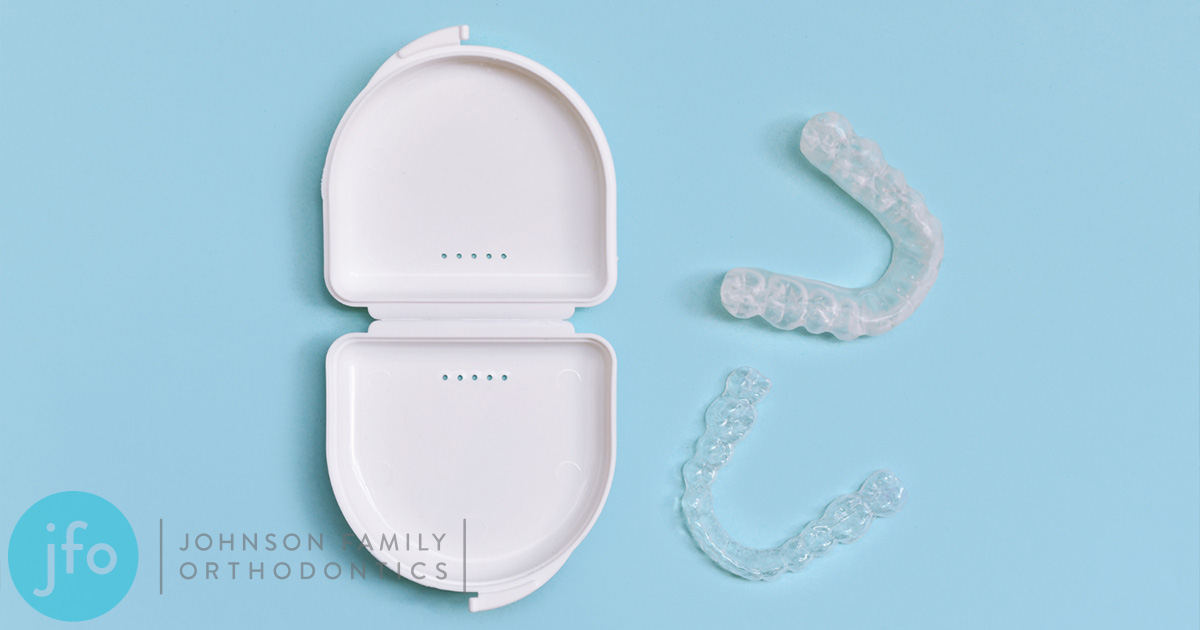
A custom night guard may also be recommended. These don’t stop the grinding, but they do protect the teeth. They are more precise and usually more comfortable than over-the-counter guards.
What Are The Next Steps?
If you’re tired of waking up with a sore jaw, make an appointment with Dr. Johnson. He’ll check for uneven wear patterns, evaluate your bite structure, and assess the functioning of your jaw. Then, he can figure out the best path forward for your specific situation. There’s never any judgment or pressure. Instead, you’ll get a clear plan to help your jaw (and your sleep) finally get some rest.